30+ activities
Broad enough to reflect how people actually move in real life.
GlucoMove is built around the idea that activity is one of the few daily variables users can still adjust in real life. The ordinary dataset shows whether the rise looked smaller. Dedicated tests are where effect becomes clearer and more direct.
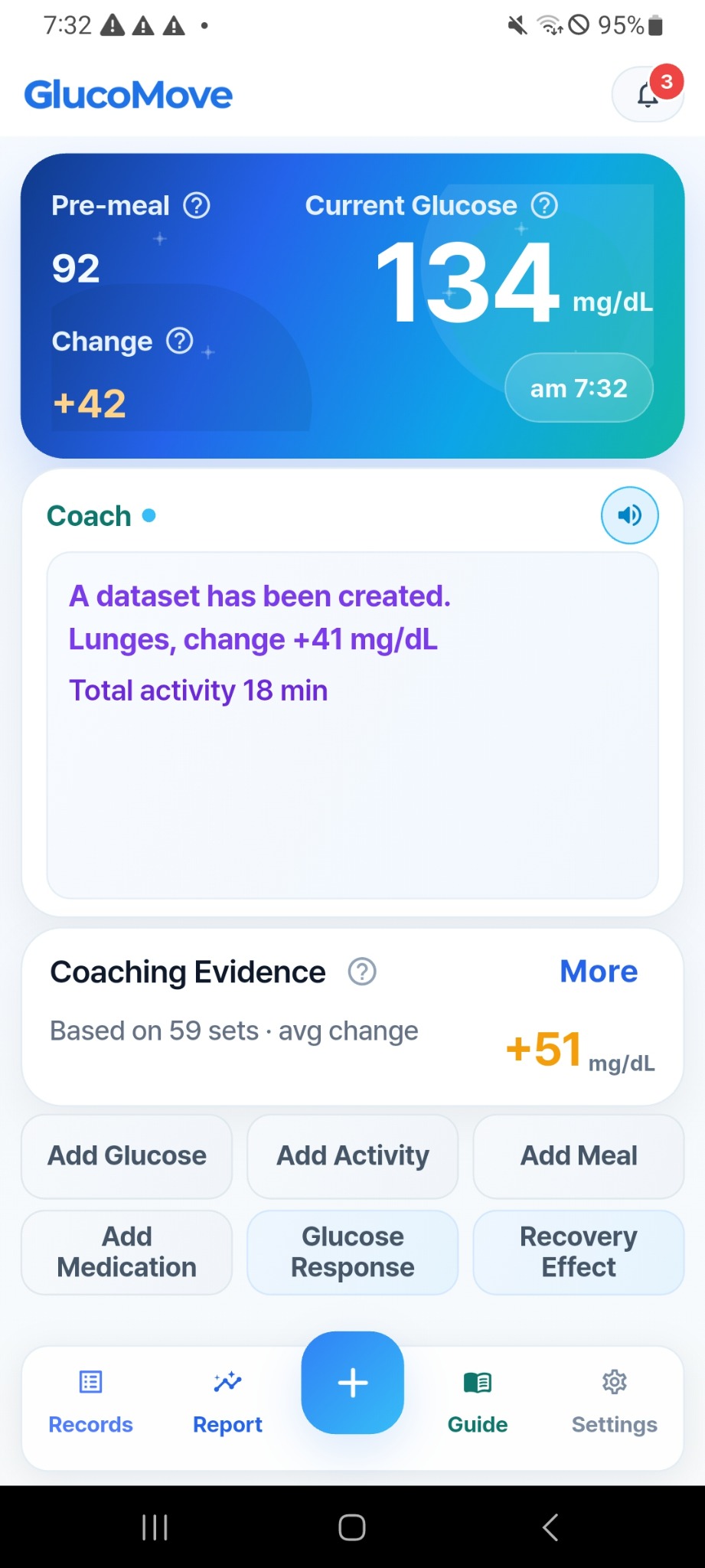
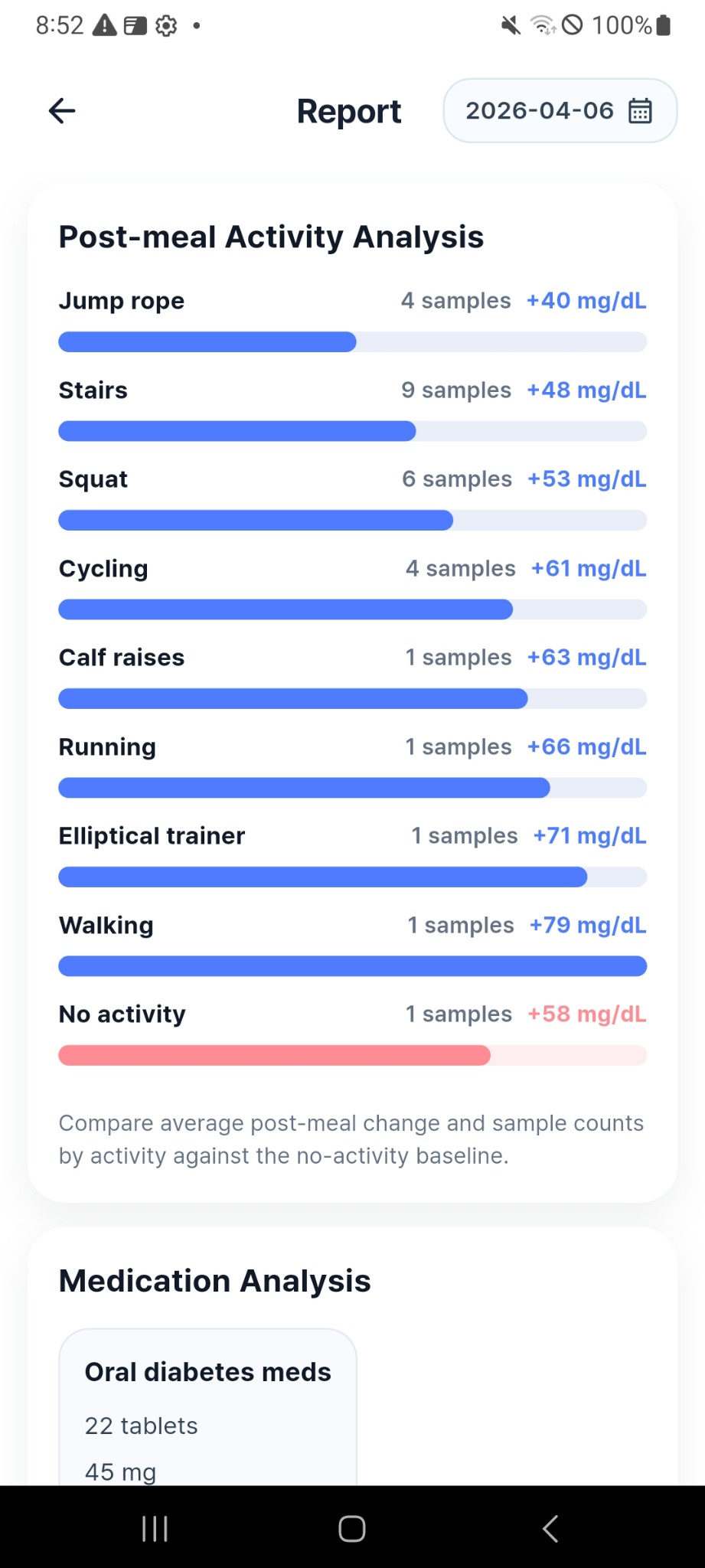
Users can choose from more than 30 activity types. Seven recommended activities are highlighted because they are practical in daily life and useful for post-meal spike control.
Broad enough to reflect how people actually move in real life.
Focused on activities that are accessible and effective for daily spike control.
Shown with color-coded dot levels so intensity is easy to read visually.
Users can keep an activity photo as part of the record for later review.
All activities are recorded using time-based entry. GlucoMove supports 1-minute time units so users can log activities more naturally and consistently in daily life.
Record walking, cycling, and similar activities using 1-minute time units.
Because food amount and composition are not logged with precise laboratory detail in normal daily life, the ordinary dataset should be interpreted as change reading: did the rise look smaller when activity was included?
The change looked smaller, the peak felt more manageable, or the response seemed more stable.
Ordinary daily datasets should not claim “activity lowered glucose by X mg/dL” as if the meal were perfectly quantified.
Personal glucose response tests and activity recovery effect tests are not daily flows. They are periodic, more controlled checkpoints that allow activity effect to be interpreted more clearly.
Useful for understanding baseline response in a more standardized condition.
Useful for reading which activity appears to help recovery more clearly under test conditions.
Periodic only. These tests should not become a daily burden, especially when fasting carbohydrate intake is involved.