Daily pattern reading
Useful for seeing that the rise was smaller, that the change looked more stable, and that a routine may be worth repeating.
Ordinary daily datasets help users see whether the post-meal rise was smaller. Dedicated tests exist for a different purpose: they offer a more controlled way to understand personal response and activity recovery effect.
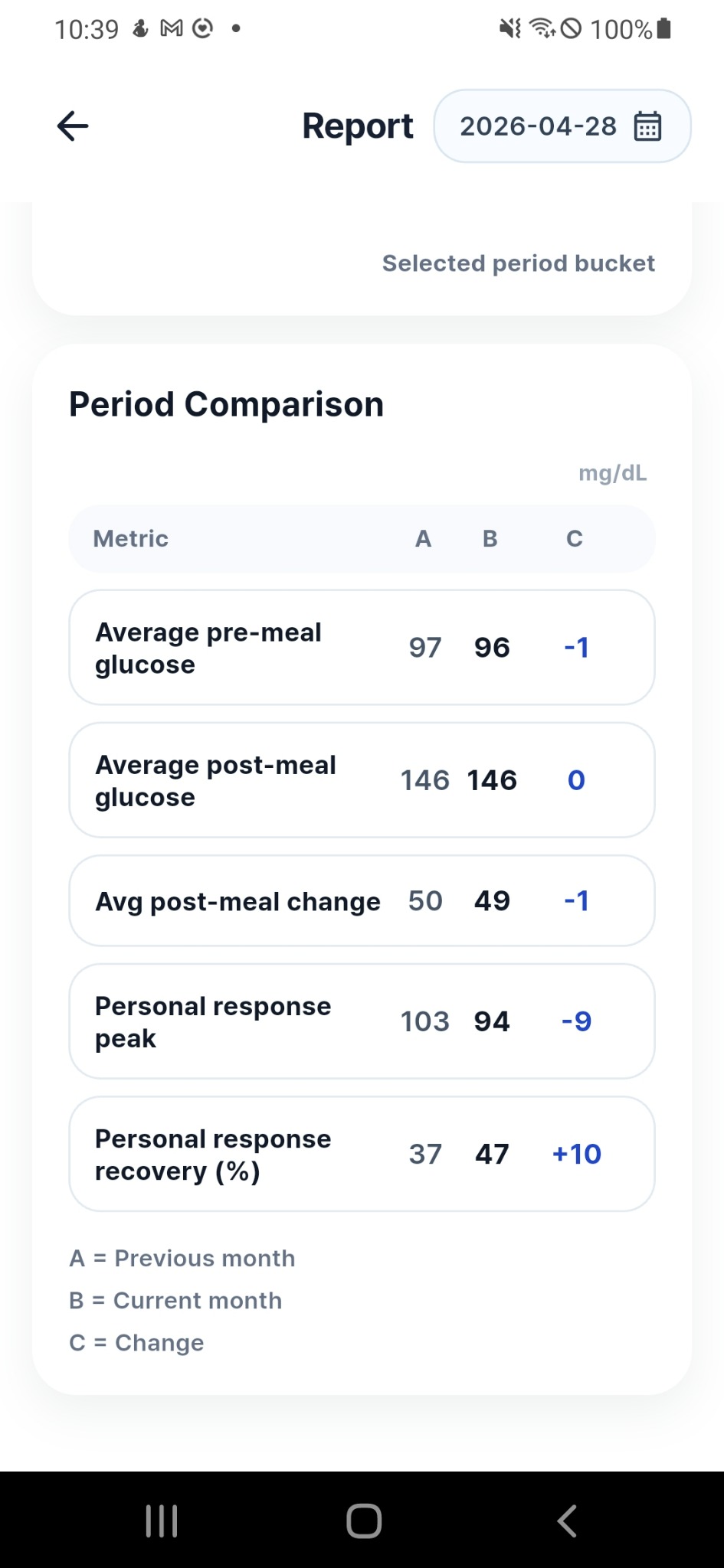
Useful for seeing that the rise was smaller, that the change looked more stable, and that a routine may be worth repeating.
Useful when users want a more controlled way to compare personal response or recovery effect.
This test is for periodic check-ins, not for everyday routine. It helps users understand how their glucose tends to respond under a more standardized condition.
It reduces some of the ambiguity that ordinary daily life introduces.
Clearer interpretation of baseline response before comparing activity strategies.
Not a daily recommendation and not a replacement for normal lifestyle structure.
Compared with ordinary datasets, this test is a stronger basis for saying which activity appeared to help recovery more clearly and by how much under the test condition.
It answers a more direct question than daily datasets can answer.
Which activity pattern appears to help recovery more clearly in a controlled scenario.
Use it periodically to update understanding, not as a daily burden.
Ordinary daily datasets help users see whether the rise looked smaller. These two tests exist for a different purpose: they provide a more structured way to understand personal response and post-meal recovery in a repeatable test format.
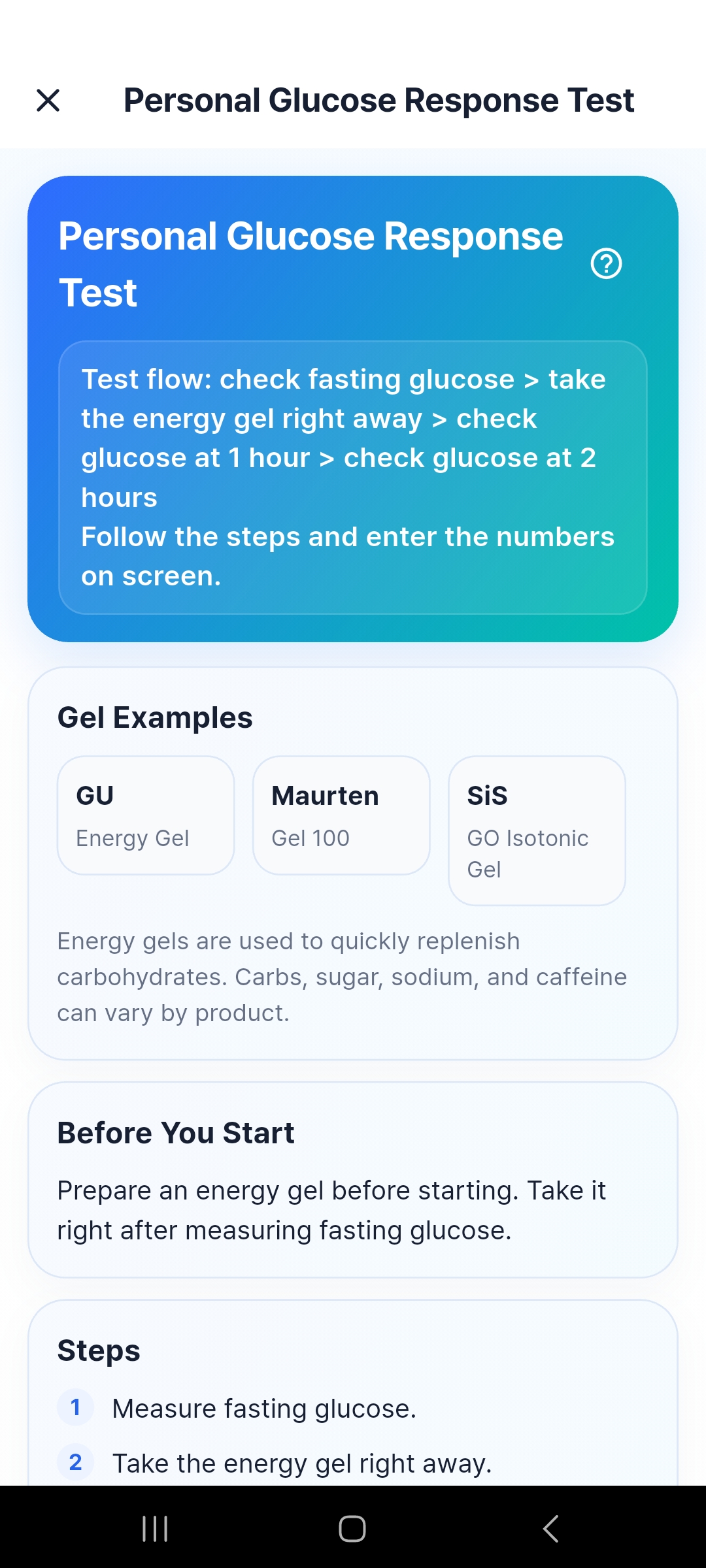
This test helps users compare fasting, 1-hour, and 2-hour response in a more controlled setup than ordinary daily logging.
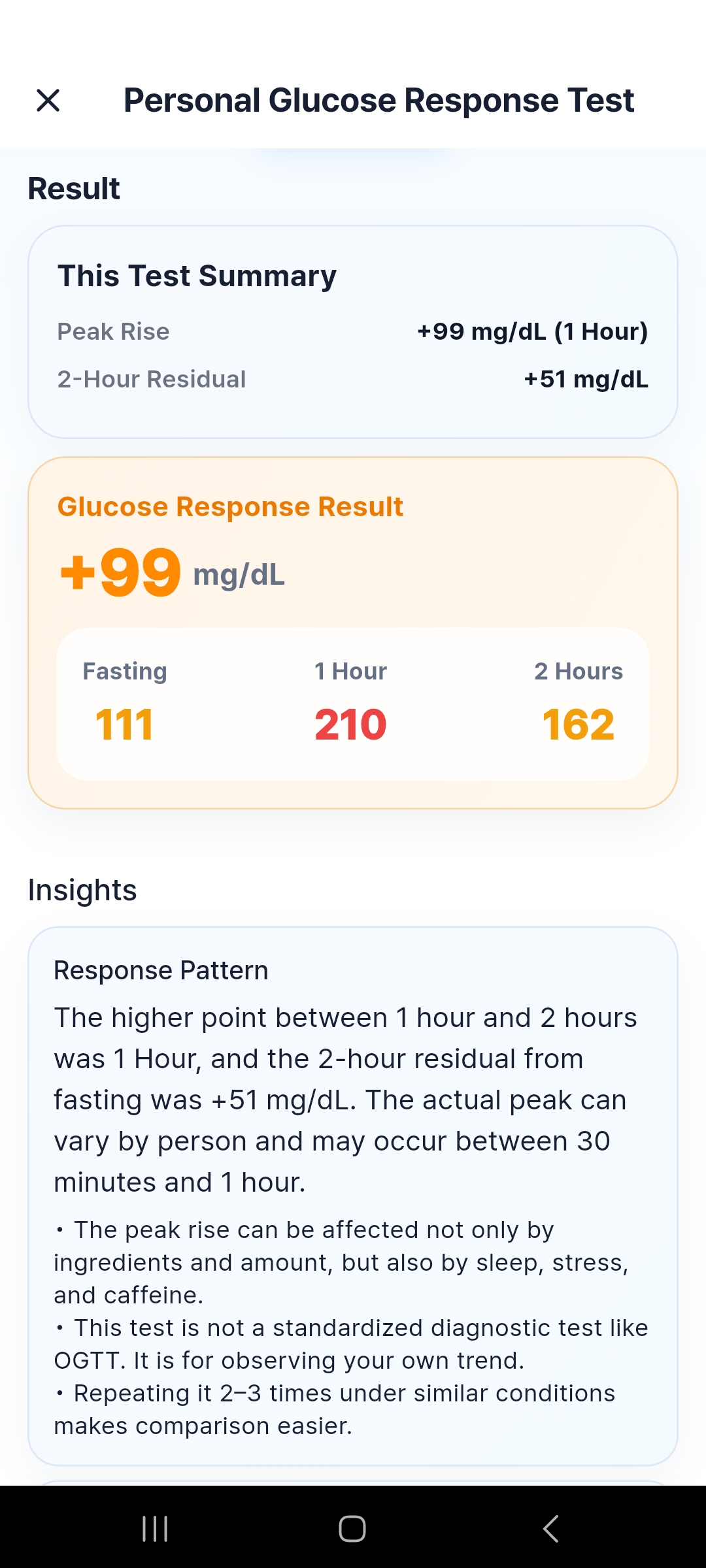
Trend and session-level review make it easier to see whether the baseline response itself is changing over time.
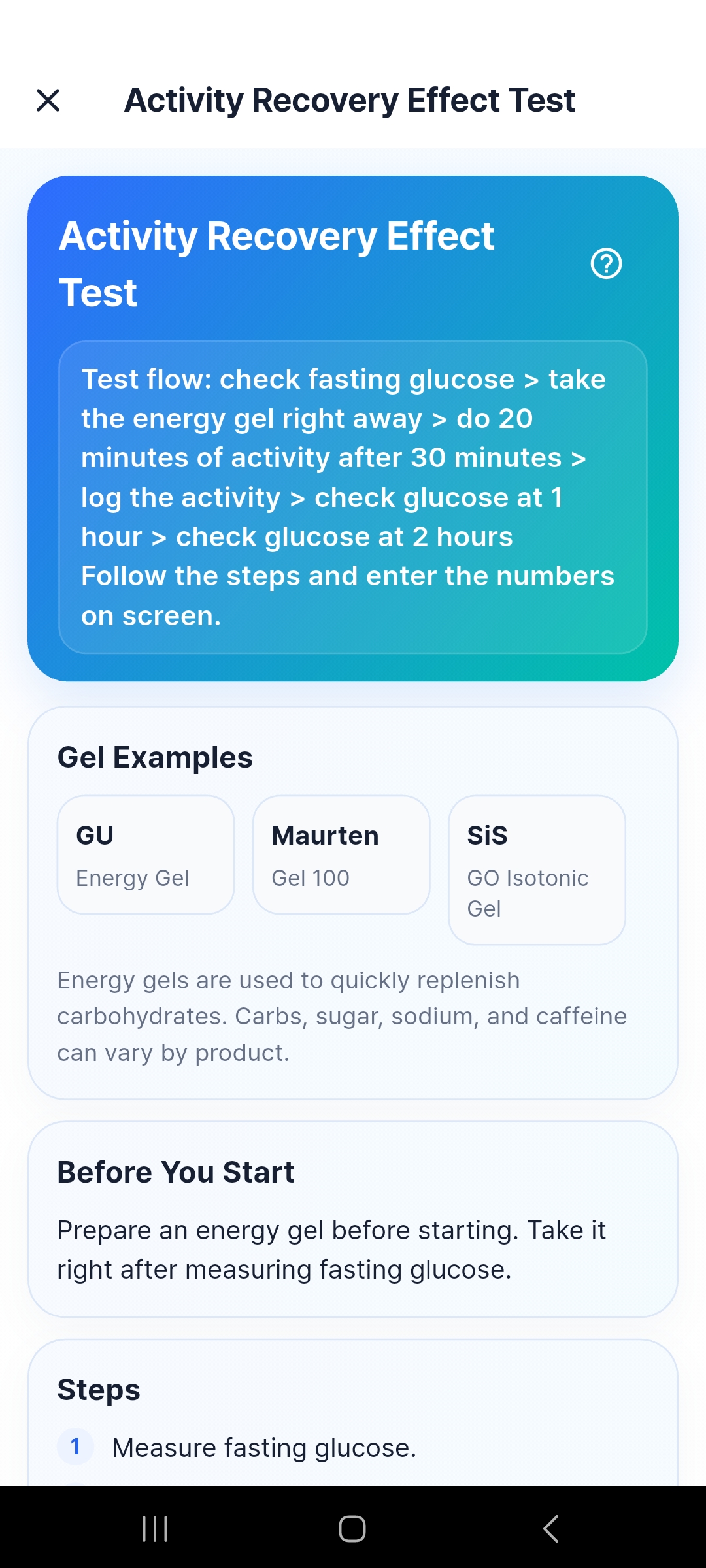
This test is designed to show how activity can be reviewed in a more controlled recovery context rather than inferred only from everyday events.
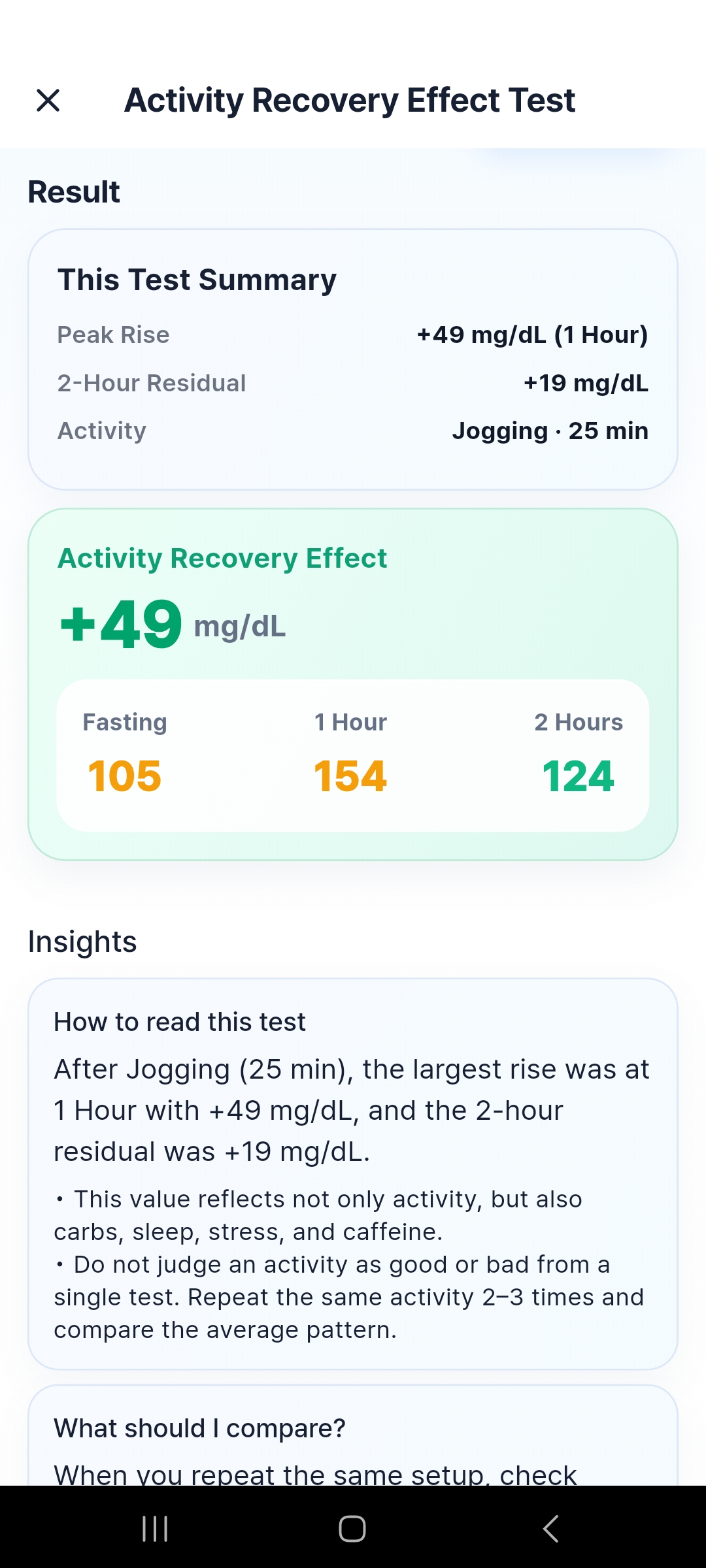
Recovery-focused comparison helps users understand which activity pattern appears more effective under the selected test structure.
Some tests require fasting carbohydrate intake. That is one reason they should be recommended as controlled, occasional check-ins rather than part of a daily habit.
Use testing on a planned rhythm to learn more clearly.
Daily repetition is not the goal and may not be healthy.
The everyday loop should still center on pre-meal, activity, and post-meal.