Why post-meal control matters
Why the post-meal rise deserves attention before patterns worsen further.
Resources in GlucoMove should help users and partners understand how the system is meant to be used in real life: why post-meal control matters, why datasets are structured the way they are, why meal levels are simplified, when tests are appropriate, and how activity should be interpreted safely.
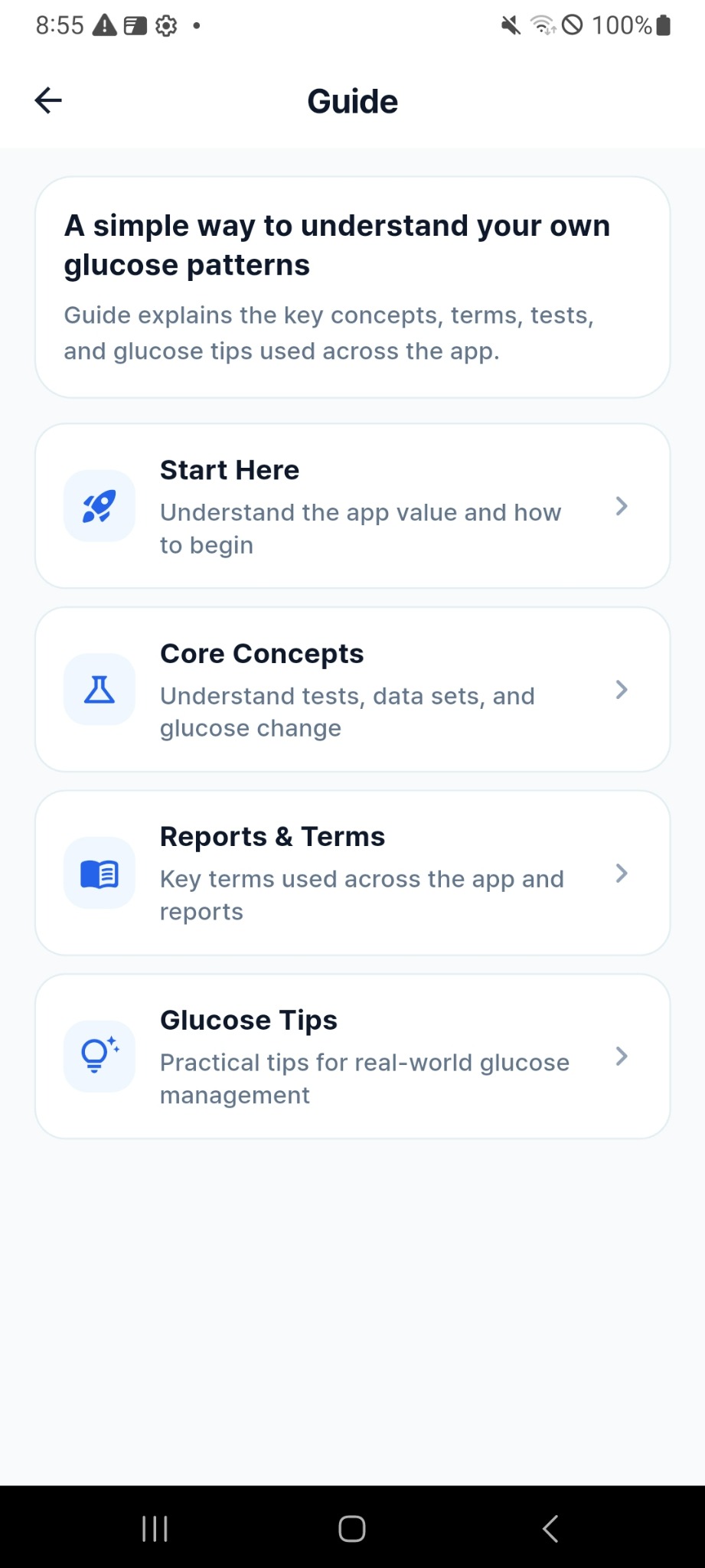
The strongest resource structure is one that mirrors product maturity: basic setup and understanding first, daily routine improvement second, and more advanced testing and interpretation later.
Why the post-meal rise deserves attention before patterns worsen further.
How a few connected checks become one usable daily pattern.
Why the app focuses on a smaller rise and a more stable change rather than exact daily effect claims.
How and why dedicated tests fit into the product without becoming a daily burden.
Most users cannot keep precise nutrient entry forever. That is why the system uses Level 1, 2, and 3 meal choices and supports photo-based recall through Records thumbnails. Resources should explain that choice clearly so users trust the simplification.
Fast enough to repeat and realistic enough to sustain.
Users can remember what they ate visually, not only through text tags.
The point is useful comparison, not perfect food accounting.
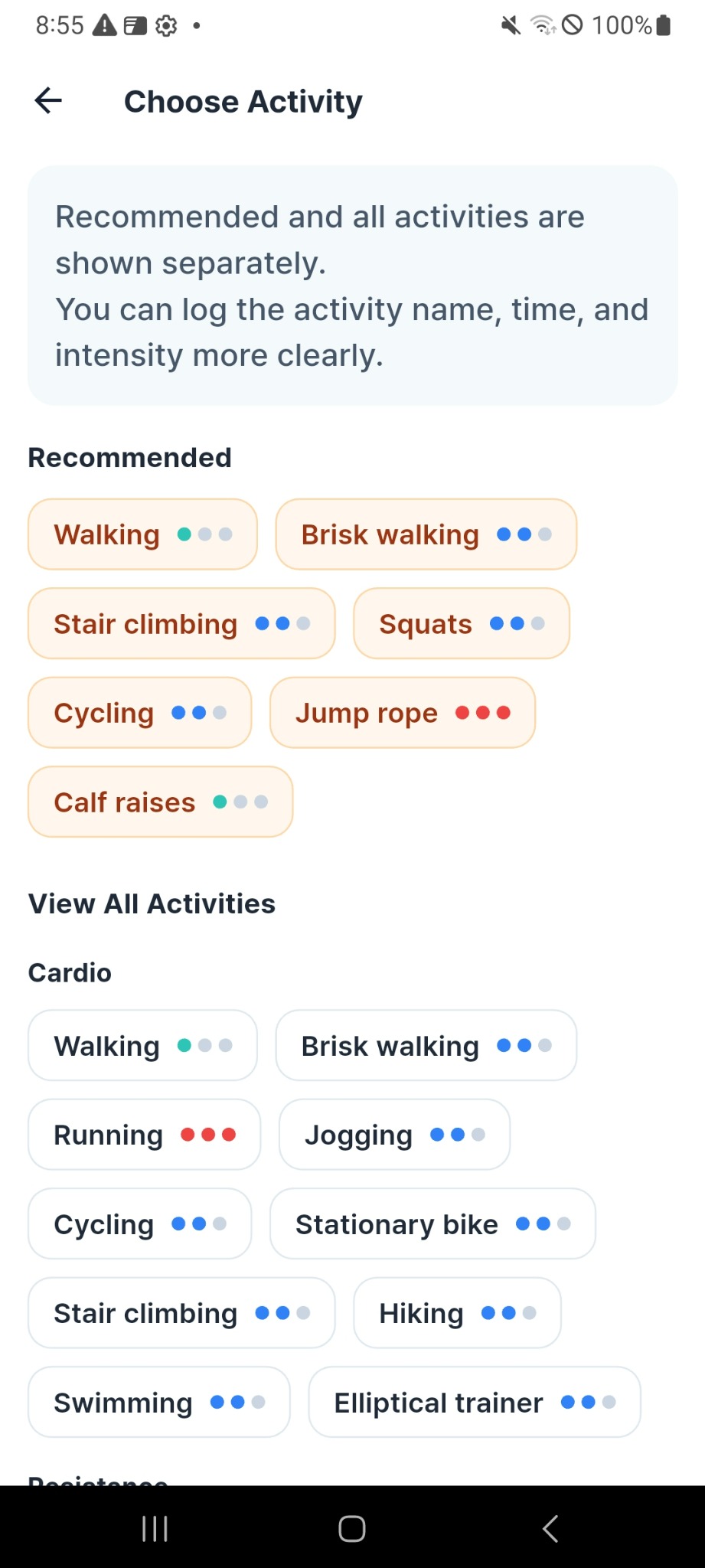
Resources should explain the recommended 7 activities, the broader 30+ activity library, the meaning of intensity dots, and how to choose between time-based or repetition-based logging depending on the movement itself.
Why these activities are practical for everyday spike control.
How broader choice helps real-life fit without losing structure.
How Level 1, 2, and 3 intensity creates a visual reading system.
How to choose the logging style that best matches the activity.
Resources should clearly explain that activity can help reduce the post-meal rise while still requiring careful thinking for insulin users, especially around hypoglycemia risk and timing.
Resources should explain why personal response tests and activity recovery effect tests are useful, but should not be encouraged every day because of burden and fasting carb requirements.