Post-meal glucose is critical
It is one of the most important signals in early metabolic dysfunction, yet it is rarely tracked with enough structure to guide action.
GlucoMove turns pre-meal glucose, medication, meals, activity, and post-meal response into one clear daily dataset—so patterns are easier to see and actions are easier to repeat.
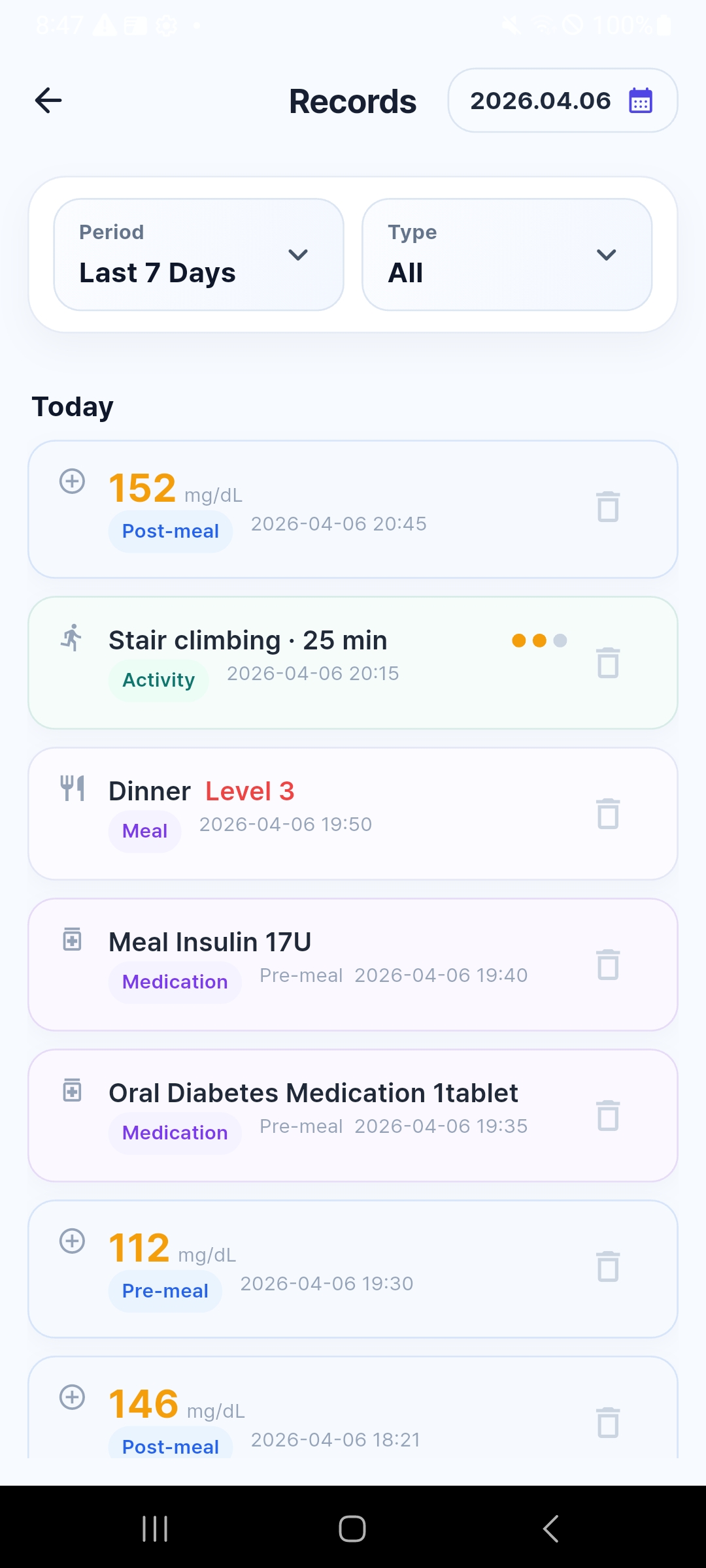
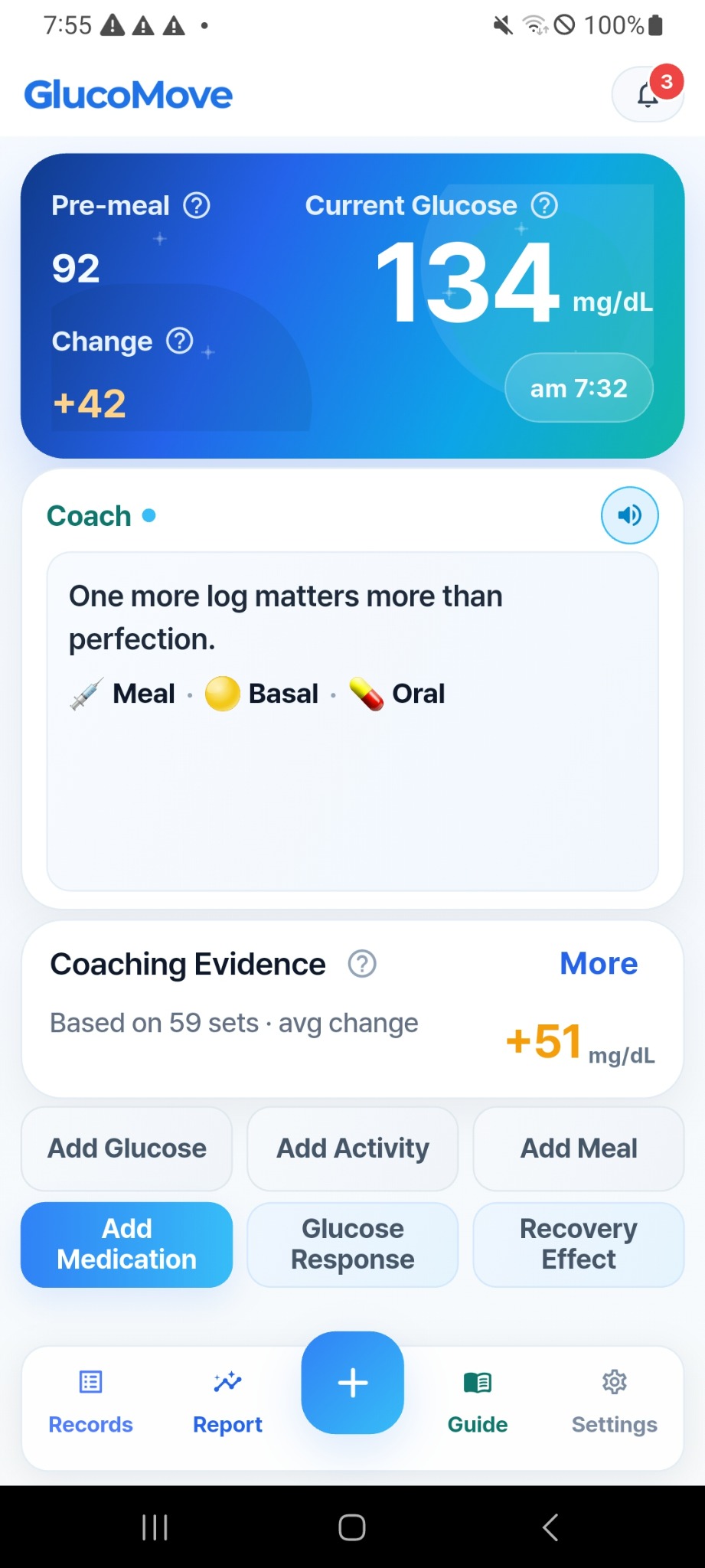
Glucose numbers become useful when they are connected to context. GlucoMove helps turn a small number of daily checks into a repeatable pattern, not a scattered log.
It is one of the most important signals in early metabolic dysfunction, yet it is rarely tracked with enough structure to guide action.
A few isolated numbers cannot show cause and effect. Without context, users see values—but not the pattern behind them.
When pancreatic function is still partially preserved, reducing repeated spikes may matter most. That is when consistent behavior matters.
But post-meal activity is still actionable. Movement is the variable most people can actually use, repeat, and learn from.
GlucoMove started from a practical question: if post-meal glucose matters so much, why is it still managed with scattered numbers? A single reading is easy to forget, but a complete daily sequence can show what actually changed the result.
Instead of asking people to measure endlessly, GlucoMove makes each check more useful. One well-built daily dataset can become a practical habit, and repeated datasets can reveal a personal pattern.
“This is not about measuring more. It is about measuring smarter, learning faster, and protecting what still works.”
When diet is difficult to control perfectly, well-timed post-meal activity can still lower spikes and support earlier protection.
A simple daily sequence is easier to repeat than scattered tracking, and repeated sequences are what create usable insight.
Especially with insulin, activity can help—but it also requires awareness to avoid hypoglycemia.
GlucoMove does not treat glucose, activity, meal, and medication as separate logs. It connects them into one sequence so users can finally see what changed the result.
Capture the starting point before the next response begins.
Include insulin or oral medication because treatment context changes the next response.
Add the meal context so glucose change can be interpreted against the actual glucose load.
Record the movement performed after the meal as the practical variable users can act on.
Complete the event with the outcome that matters most: how the body responded after the full sequence.
Each dataset becomes one interpretable event. The minimum useful structure is pre-meal, activity, and post-meal, while meal and medication add more context when available.
Instead of asking users to “log more,” the system makes each completed set worth more.
Once patterns become consistent, measurement burden may gradually loosen—from daily to every other day to a few times per week.
Once datasets accumulate, GlucoMove can show which activities, durations, and timing patterns were associated with lower post-meal change. That turns coaching from a vague suggestion into something specific enough to repeat.
Recent sets are summarized into action-oriented guidance instead of disconnected historical logs.
The goal is not a perfect day. The goal is a repeatable next action a user can realistically follow.
For users taking insulin, activity guidance must always be interpreted with caution to reduce hypoglycemia risk.
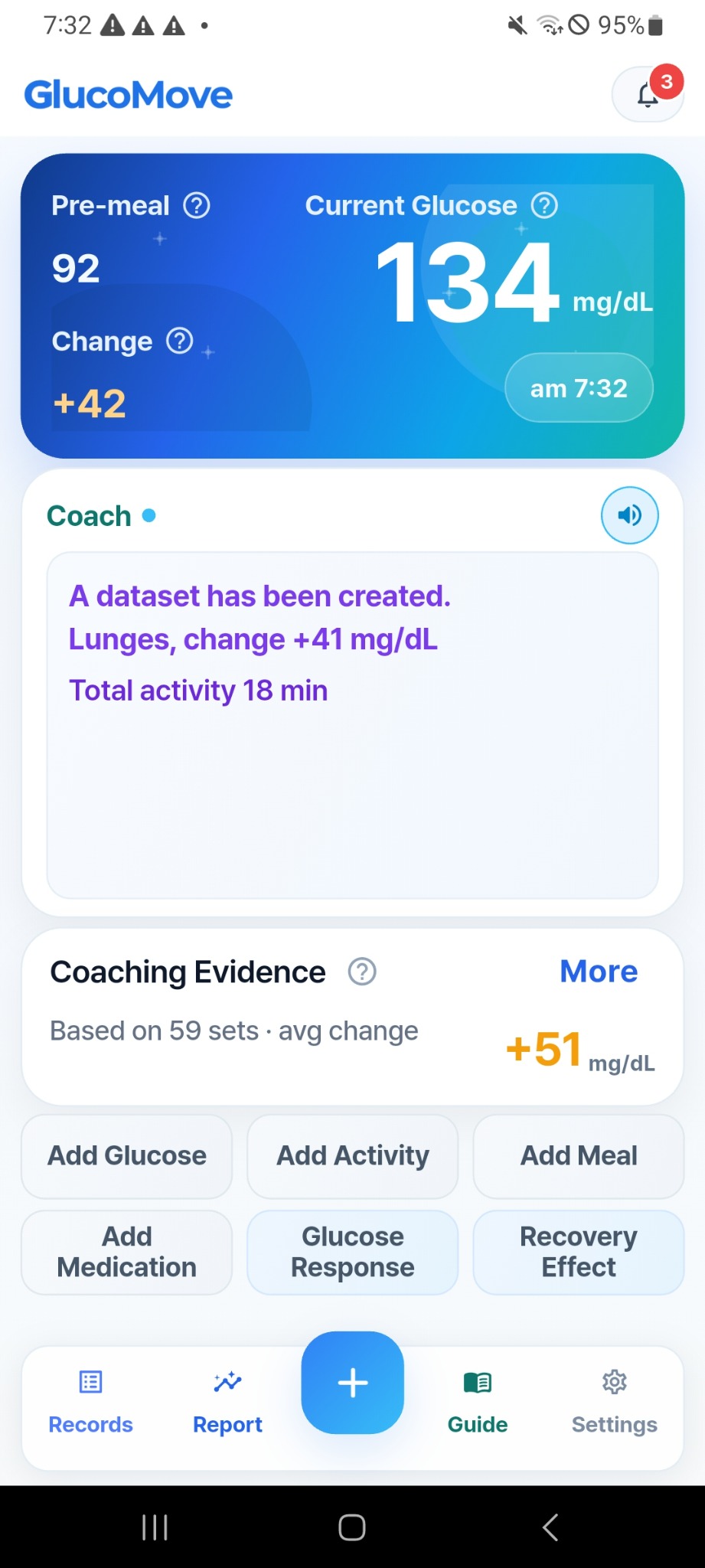
The app is built around a simple observation: even when diet is not perfectly controlled, activity can still reduce spikes in a meaningful way. That makes it one of the most practical levers for daily protection.
Post-meal movement can change the shape of the glucose response more than passive observation ever could.
Short, repeatable activity blocks are easier to sustain—and still useful enough to become part of daily life.
Once a user knows which activities consistently help, the next day becomes less guesswork and more control.
The home screen keeps the product anchored to the same principle: understand the current state, connect it to context, and guide the next log or activity.
Medication can also be added from the same daily flow. That helps users capture insulin, GLP-1, or oral medication without leaving the routine structure built around pre-meal, activity, and post-meal response.
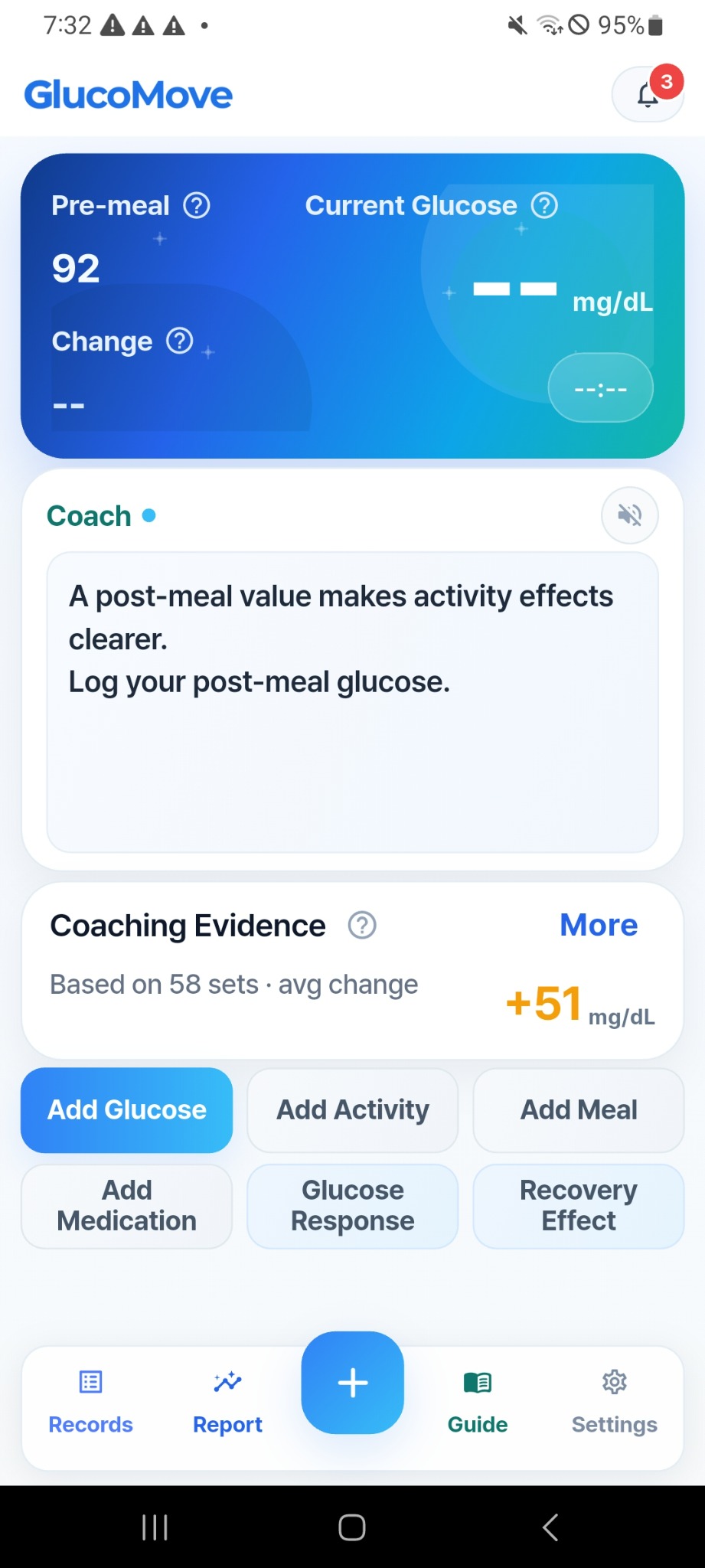
GlucoMove includes response-oriented views so users can see how pre-meal glucose, carbohydrate load, and post-meal activity relate to the final result. That makes the app useful not only for tracking—but for learning.
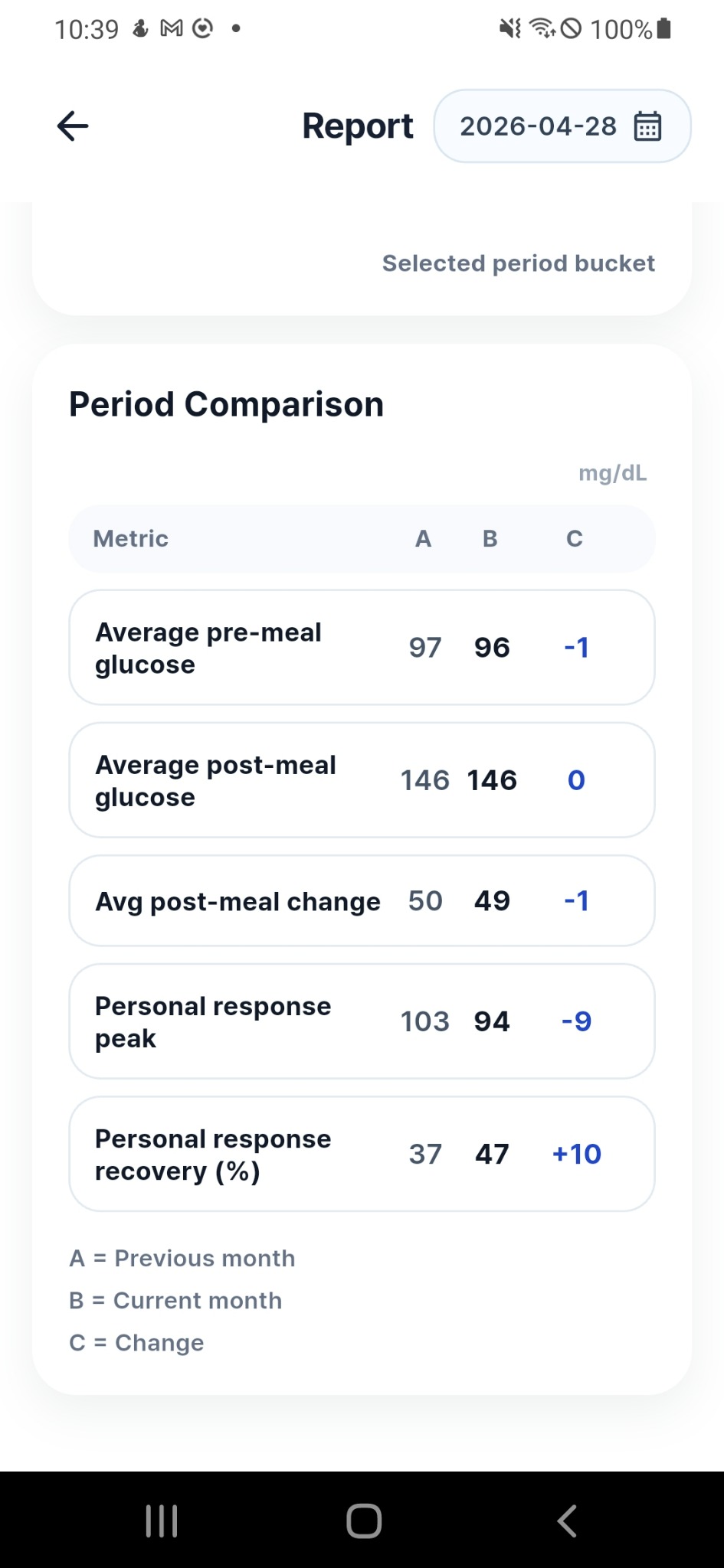
With enough structured sets, GlucoMove can help users move from “What is my glucose right now?” to “What tends to happen after this kind of meal, activity, and medication pattern?”
Users can review whether a day was mostly stable, where spikes appeared, and which actions were associated with better responses.
Repeated datasets reveal recurring responses that users can trust more than one-off numbers.
As the pattern becomes familiar, the system can support a smarter, lighter rhythm of measurement.
The same dataset logic that helps an individual user also helps professionals review behavior, response, and consistency with less ambiguity. Instead of raw log overload, the platform can present interpretable sets and response patterns.
Clear, accessible guidance on why post-meal spikes deserve more attention in early management.
A practical guide for turning a few daily checks into one usable pattern.
Important considerations for people who combine movement with insulin or other medication plans.
GlucoMove was built to make post-meal control more structured, more practical, and easier to repeat.